NIST’s Collection of 10,000 Fingerprints Trains Humans & AI
- frakrac6
- Mar 29
- 5 min read
Fingerprinting for identification began in the mid-to-late 19th century, with systematic use in law enforcement starting in the 1890s. While ancient civilizations used fingerprints for seals, modern forensic use began in 1858 with Sir William Herschel in India, followed by the first criminal conviction in 1892 in Argentina.


Since the 1911 People v. Jennings case, fingerprint evidence has been legally admitted in U.S. courts, establishing it as a key tool for prosecutors.
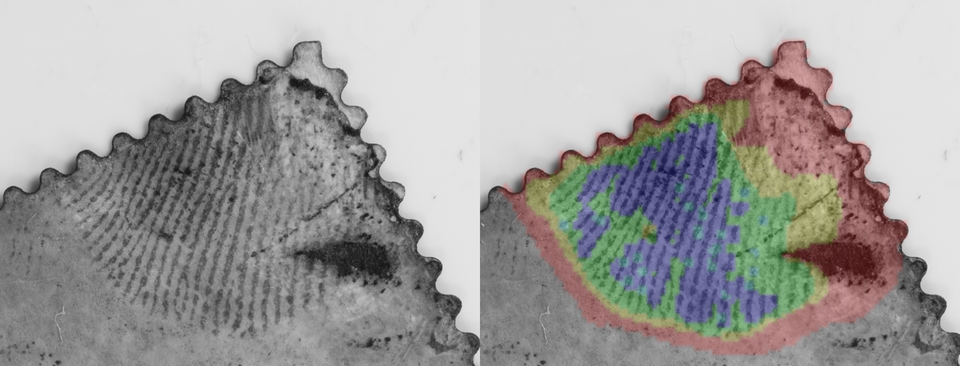
A recently published article by Chad Boutin, Science and IT Writer at the National Institute of Standards and Technology (NIST), reports that a collection of 10,000 fingerprints has been fully annotated with details to help train both human fingerprint examiners and AI tools. NIST has also released open-source software to evaluate and sort fingerprints by quality, potentially helping fingerprint examiners work more efficiently.
The National Institute of Standards and Technology (NIST) is a non-regulatory U.S. federal agency within the Department of Commerce, founded in 1901. It promotes innovation and industrial competitiveness by advancing measurement science, standards, and technology, thereby enhancing economic security and improving quality of life.
Mr. Boutin’s article revealed that:
A NIST collection of 10,000 fingerprints has now been fully annotated with details that will help train both human fingerprint examiners and AI tools.
NIST has also released open-source software to evaluate and sort fingerprints by quality, potentially helping fingerprint examiners work more efficiently.
The two releases are intended to help improve forensic fingerprint examination, an important aspect of criminal investigations.




Comments